
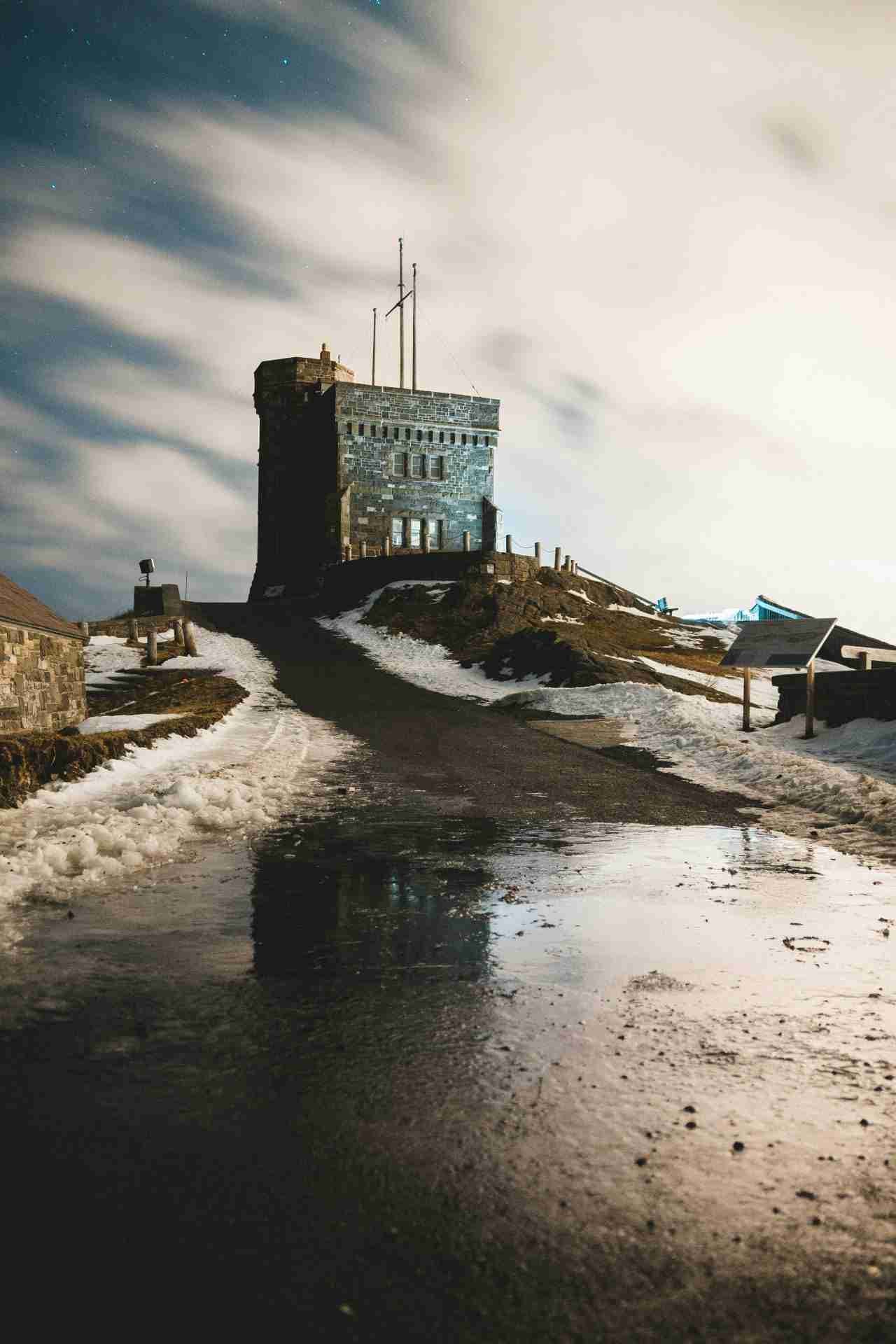
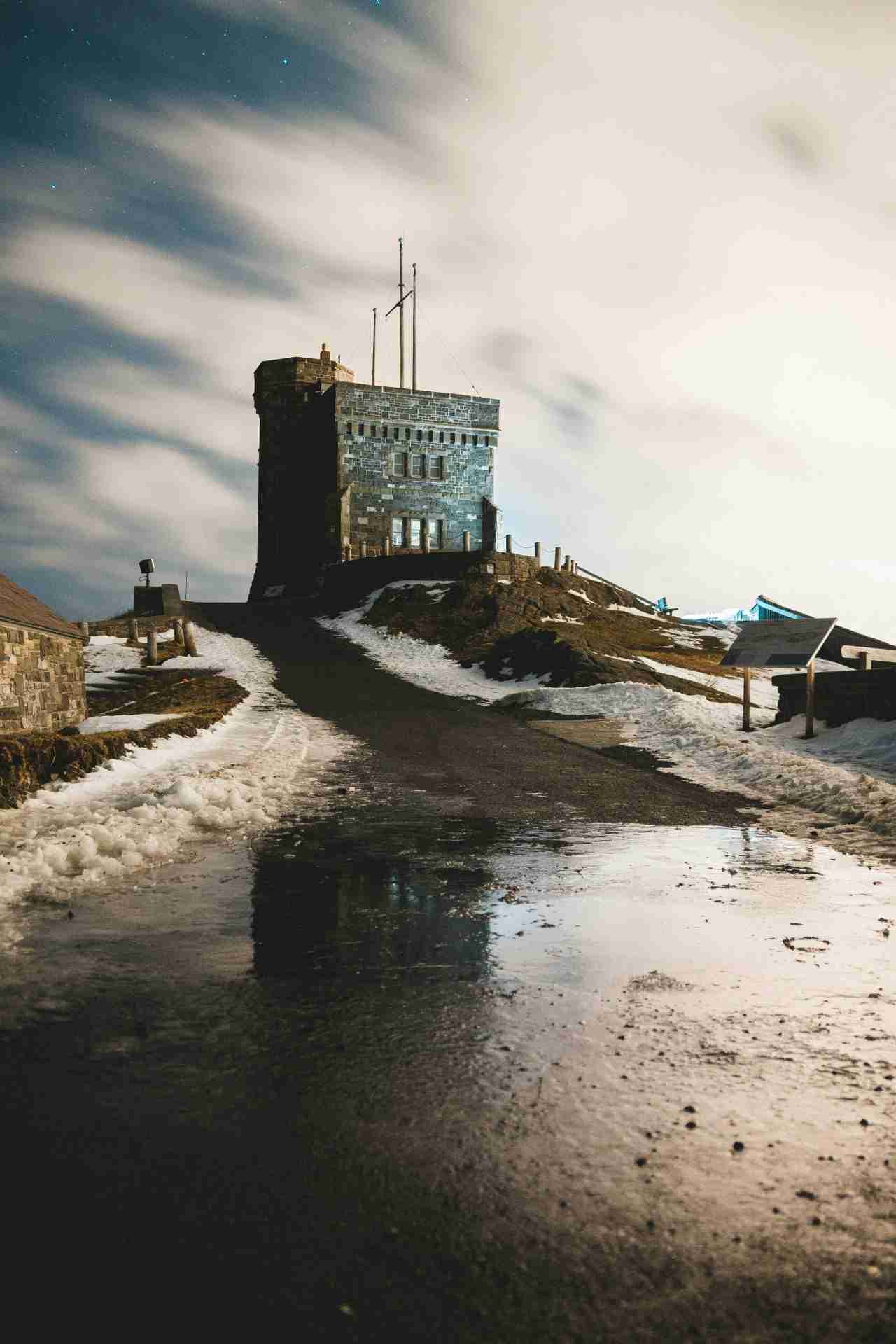
Perched atop Signal Hill in St. John's, Newfoundland, Cabot Tower is one of the most iconic and historically significant landmarks in the province. Overlooking the rugged coastline of the Atlantic Ocean, the tower stands as a symbol of Newfoundland's military and communications history. Built in 1898 to commemorate the 400th anniversary of John Cabot's voyage to North America, it later became the site of the first transatlantic wireless transmission by Guglielmo Marconi in 1901. Today, Cabot Tower offers photographers breathtaking panoramic views, dramatic seascapes, and stunning architectural details that make it a must-visit location in Newfoundland's capital city.
Signal Hill itself is a prime photography destination, offering sweeping vistas of St. John's Harbor, the Narrows, and the vast Atlantic Ocean. The combination of historic stone architecture, rugged cliffs, and ever-changing weather conditions provides endless creative opportunities for photographers of all skill levels.
Best Photography Opportunities
• Cabot Tower and Its Historic Architecture
– The tower's distinctive stonework and Gothic Revival design make for a striking subject. Capturing the structure from various angles emphasizes its grandeur, while close-up shots highlight the intricate details of its windows, turrets, and stone textures. Sunrise and sunset light bring out the tower's warm tones, creating a dramatic contrast against the sky.
• Panoramic Views of St. John's and the Atlantic
– The vantage point from Cabot Tower offers some of the best sweeping views in Newfoundland. Wide-angle shots capture the entire city, while zoomed-in compositions can highlight key features such as The Narrows, the Battery neighborhood, and the harbor's colorful waterfront. On clear days, the deep blues of the ocean stretch endlessly to the horizon.
• Sunrise and Sunset Over the Atlantic
– Signal Hill is one of the best places in Newfoundland to photograph the sun rising over the Atlantic. The early morning light bathes the cliffs and tower in golden hues, while the setting sun casts long shadows over St. John's, creating a magical atmosphere for photography.
• Stormy and Foggy Conditions for Moody Seascapes
– Newfoundland's famously unpredictable weather can transform Cabot Tower and the surrounding landscape into an entirely different scene. Low-hanging fog partially obscuring the tower adds mystery, while stormy waves crashing against the coastline create a sense of power and movement.
• Night Photography and City Lights
– After dark, the city lights of St. John's sparkle below Signal Hill, offering excellent opportunities for night photography. With a tripod and long-exposure settings, photographers can capture star trails above the tower or light trails from cars winding up the hill.
Best Time to Visit
Cabot Tower and Signal Hill are stunning year-round, though each season offers a unique photographic experience. Spring and summer provide vibrant green landscapes and longer daylight hours, perfect for capturing the tower against bright blue skies. Autumn adds a warm palette of reds and oranges, making the rocky cliffs and grassy hillsides even more striking. Winter, though cold and often windy, offers dramatic scenes of snow-covered landscapes and icy formations along the coastline.
For optimal lighting, sunrise and sunset are the best times to visit. The soft, directional light enhances textures, colors, and depth, making for more dynamic compositions. Early mornings also provide the added benefit of fewer crowds, allowing for unobstructed shots of the tower and surrounding scenery.
How to Get There
Cabot Tower is located at the summit of Signal Hill in St. John's, just a 10-minute drive from downtown. Visitors can reach the site via Signal Hill Road, which winds up the hill and offers scenic pull-offs along the way. Parking is available near the tower, but spaces can fill quickly during peak seasons.
For those looking for a more immersive approach, the North Head Trail is a highly scenic hiking route that leads up to Cabot Tower from The Battery neighborhood. This trail offers some of the best ocean views and is ideal for capturing different perspectives of the tower along the ascent.
Admission to Signal Hill and Cabot Tower is free, though guided tours and interpretive exhibits inside the tower may have seasonal fees.
Exploring Signal Hill National Historic Site
Beyond Cabot Tower, Signal Hill National Historic Site offers an incredible variety of photographic opportunities, blending history, dramatic landscapes, and sweeping ocean views. The site played a critical role in Newfoundland's military defense, with fortifications dating back to the 18th century. Today, visitors can explore the remnants of these historic structures, including the Queen's Battery Barracks, which features stone walls, cannons, and interpretive exhibits that provide insight into the area's strategic importance.
The rugged coastal scenery surrounding Signal Hill is equally compelling. Cliffside trails lead to breathtaking vantage points overlooking the Atlantic Ocean and The Narrows, the narrow entrance to St. John's Harbor. The famous North Head Trail, one of Newfoundland's most scenic hikes, winds along the steep cliffs and offers unparalleled views of the coastline. The interplay of light on the ocean, combined with Newfoundland's ever-changing weather, makes every visit to Signal Hill unique and dynamic for photographers.
In addition to its historic and natural beauty, Signal Hill is known for its role in communications history. It was here that Guglielmo Marconi received the first transatlantic wireless signal in 1901, marking a major breakthrough in global communication. Photographers interested in capturing both history and landscape can incorporate the commemorative plaques and exhibits into their compositions, adding depth and storytelling to their images. Whether shooting the historic structures, the dramatic cliffs, or the sweeping ocean vistas, Signal Hill National Historic Site provides an unforgettable experience for any photographer.
Nearby Photography Locations
– This historic neighborhood at the base of Signal Hill is known for its brightly colored homes nestled along the rocky cliffs. The narrow streets and oceanfront setting make it a fantastic location for vibrant and unique compositions.
– Located across The Narrows from Signal Hill, this picturesque lighthouse provides stunning views back toward Cabot Tower and the entrance to St. John's Harbor. The contrast between the rugged coastline and the red-and-white lighthouse makes for striking imagery.
– A charming fishing village just a short drive from Signal Hill, Quidi Vidi offers rustic wooden docks, fishing boats, and reflections in the sheltered waters of Quidi Vidi Lake. It's an excellent spot for capturing the essence of Newfoundland's maritime heritage.
• Cape Spear Lighthouse National Historic Site
– Just a 20-minute drive from Cabot Tower, Cape Spear is the easternmost point in North America. Its dramatic cliffs, historic lighthouse, and crashing waves make it a must-visit location for seascape photography.
– St. John's is famous for its colorful row houses, often referred to as Jellybean Row. These vibrant buildings, set against the hilly streets of the city, create an eye-catching contrast with the more rugged and historic elements of Signal Hill.
Cabot Tower and Signal Hill are among Newfoundland's most photogenic and historically rich locations. Whether capturing the grandeur of the tower, the breathtaking ocean views, or the vibrant city below, this landmark offers endless opportunities for stunning photography in any season.
Comments
Loading comments…